Why bone is crucial to implant success
For a dental implant to last, it must be completely surrounded and supported by an adequate amount of healthy bone. However, when a tooth is lost, the bone supporting it physiologically begins to resorb, becoming thinner or shallower over the months. At Dental Vita, assessing bone volume is the crucial first step: placing an implant where there is insufficient support would compromise the stability of the implant and the health of the surrounding tissues. Bone regeneration is the solution that allows us to "rebuild" this foundation.
Who needs a transplant or bone regeneration?
Not all patients require this step, but it is very common in those who have lost teeth for many years, those who have suffered from severe periodontitis, or those who have suffered trauma. Thanks to the 3D diagnostics (Cone Beam CT) available at our clinic, we are able to measure bone thickness to the nearest millimeter. If the parameters are not optimal for ensuring the implant's primary stability, our surgeons will propose bone augmentation, making implant placement possible even where it seemed impossible.
Modern Techniques: Sinus Lift and Grafts
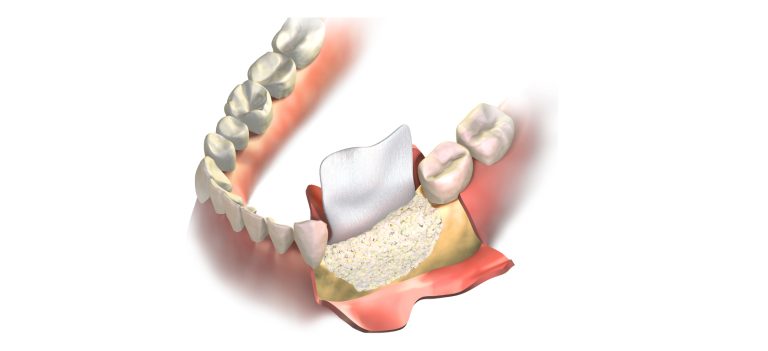
There are various procedures for bone regeneration, depending on the area of the mouth involved. For the posterior upper arch, the most common technique is the "Maxillary Sinus Lift," which creates the necessary space for the implant by lifting the sinus membrane and inserting biocompatible material. In other areas, synthetic or autologous bone grafts are used, protected by special membranes that promote healing. At Dental Vita, we use the highest-quality materials that act as a "scaffolding" on which your body will build new natural bone.
Healing and Integration Times
Bone regeneration requires patience, as we must respect the human body's biological timing. Once the graft material is inserted, it typically takes 4 to 9 months for it to transform into solid, vital bone (the integration process). In some selected cases, regeneration and implant placement can be performed in the same session; in others, it is preferable to wait for the bone to fully heal before proceeding with the implant placement. This approach ensures maximum safety and long-term success of the treatment.
An investment in facial health and aesthetics
Beyond allowing for implant placement, bone regeneration has significant aesthetic value. Bone supports not only the teeth, but also the soft tissues of the face, such as the lips and cheeks. When bone resorbs, the face can appear prematurely aged or "hollowed out." Rebuilding the correct bone volumes allows for a harmonious profile and a natural-looking smile. At Dental Vita, we don't just replace teeth, we work to restore the entire architecture of your smile, ensuring results that last for decades.