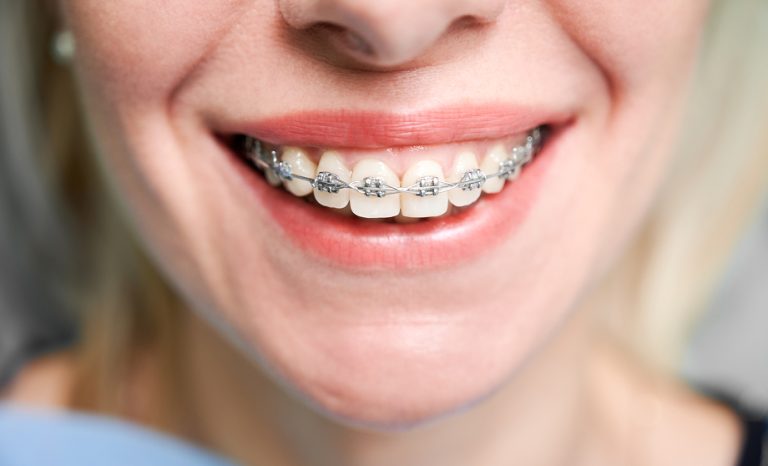
Orthodontics is a discipline that focuses on correcting the alignment of teeth and improving chewing function. Techniques have evolved rapidly in recent years, offering patients more discreet and comfortable solutions than in the past. The choice between traditional braces and modern aligners depends on personal needs, the type of malocclusion, and aesthetic expectations.
Traditional braces: reliability and precise control
Fixed braces with metal or ceramic brackets remain one of the most widely used solutions for correcting complex cases. The brackets are glued to the teeth and connected by an orthodontic wire that exerts constant pressure to guide tooth movement. Thanks to their structure, they allow for very precise control of movement and are ideal for correcting severe crowding, crossbites, and significant rotations. Although visible, they continue to be a reliable and versatile treatment for all age groups.
Modern orthodontics: clear aligners
Invisible aligners represent the great revolution of recent years. These are clear, removable aligners, custom-made from a digital scan of the teeth. The patient wears a series of aligners that are gradually replaced to gently move the teeth. This solution is highly appreciated for its discretion, as it remains almost invisible during everyday life, and is convenient due to the ability to remove them for meals and brushing.
Treatment duration: real differences
The duration varies depending on the clinical situation, but modern orthodontics is not always faster. Simpler cases can be treated quickly with aligners, while complex malocclusions often require the stability and strength of traditional braces. The choice always depends on the dentist's assessment and the desired aesthetic and functional outcome.
Comfort and daily management
Traditional braces require careful oral hygiene and some dietary considerations, as certain foods can damage wires or brackets. Aligners, on the other hand, simplify teeth cleaning and do not impose dietary restrictions, but they must be worn for many hours a day to function properly. Perceived comfort varies from person to person, but both treatments are designed to be safe and manageable in everyday life.
Aesthetics and Lifestyle
For those seeking discreet treatment, clear aligners are undoubtedly the most aesthetic choice. Traditional braces, while more visible, are also available in more subtle versions, such as ceramic brackets that blend in with the color of the teeth. The decision depends on the patient's age, professional context, and whether aesthetic impact is a determining factor.
What is the best choice?
There is no one-size-fits-all solution, because every smile is unique. The dentist carefully analyzes the situation and proposes the treatment that guarantees the best results in the shortest possible time. The final choice is based on a combination of professional diagnosis and personal preference.
